Friday, December 20, 2013

Monday, December 16, 2013
Anticipating Macbeth
Aim: How do we familiarize ourselves with Shakespearean England?

Do Now: Sit down THOU MAMMERING, TOAD-SPOTTED SKAINSMATES!!!!!!
Complete this Shakespeare Web Quest to familiarize yourself with Shakespearean England.
What's Due

Do Now: Sit down THOU MAMMERING, TOAD-SPOTTED SKAINSMATES!!!!!!
Complete this Shakespeare Web Quest to familiarize yourself with Shakespearean England.
What's Due
- Argument essay
- Thematic essay
- Independent reading projects!!!!!!
Friday, December 6, 2013
Meaning in Bodega Dreams
 |
| Socrates |
Aim: How do we conduct a Socratic Seminar?
Journal Prompt: Complete the Friday self-assessment.
The photo to the right is a sculpture of Socrates, the father of Greek philosophy. Socratic seminars are inspired by Socrates' belief in the power of questions to learn. In his view, questions are more important than information, and discussion is more productive than debate.
This week we completed reading Bodega Dreams. We’ve been analyzing the complex characters and the ways in which these characters helped develop major themes in the novel. Did the end justify the means as far as Willie Bodega was concerned? Did Bodega achieve his dreams? If so, why? If not, why not? How has Julio’s character developed over the course of the events? These are just a few important questions you should think about. There are no easy answers. Below are the English Language Arts standards that have been addressed through these lessons.
To bring closure to our reading and interpretation of the novel, we'll hold a Socratic seminar. The best way to prepare for a Socratic seminar is to have questions--open-ended questions that begin with why or how. Think of at least two questions you can ask at the seminar. You may use questions you asked for any of the 3-2-1 you completed after each day's read aloud.
Standards
CCSS.ELA-Literacy.RL.9-10.1 Cite strong and thorough textual evidence to support analysis of what the text says explicitly as well as inferences drawn from the text.
CCSS.ELA-Literacy.RL.9-10.2 Determine a theme or central idea of a text and analyze in detail its development over the course of the text, including how it emerges and is shaped and refined by specific details; provide an objective summary of the text.
CCSS.ELA-Literacy.RL.9-10.3 Analyze how complex characters (e.g., those with multiple or conflicting motivations) develop over the course of a text, interact with other characters, and advance the plot or develop the theme.
CCSS.ELA-Literacy.W.9-10.4 Produce clear and coherent writing in which the development, organization, and style are appropriate to task, purpose, and audience. (Grade-specific expectations for writing types are defined in standards 1–3 above.)
Wednesday, November 27, 2013
Rising Rising Action
 Aim: How do we identify the climax in Bodega Dreams?
 Journal Prompt #21: Conflict = Plot
Identify what, in your opinion, is the major conflict in Bodega Dreams and explain why. Don't forget to identify its type as well. (e.g. Person vs Person, Society, Nature, or Self)
Journal Prompt #22: Thanksgiving
Give thanks!
By Monday, you should have read to page 183 of Bodega Dreams.
What's Due
- Thematic Essay (worth 100 points)
- Independent reading projects should be completed.
- Journals will be collected for 2nd marking period grade.
Thursday, November 21, 2013
Aim: How do we establish a controlling idea?
Journal Prompt #18: Second Chances
Listen to "Dog Days of Spanish Harlem"
What is your opinion about second chances? Put your thoughts in a well-organized paragraph.
If you missed class, then after you listen, write a reflection on what Ernesto Quinonez is saying about second chances with this story. What evidence in the story supports this? What evidence or details in the story support what you wrote about second chances in your journal? By writing your opinion on second chances, you were establishing a controlling idea.
By now
you should have completed the four paragraphs (patches) for your thematic
essay: Your introduction in which you establish your controlling idea; two body
paragraphs with specific and relevant evidence and analysis from Bodega Dreams that support your
controlling idea; and a conclusion in which you link everything you’ve said
back to your controlling idea.
Now
it’s time to sew together these four paragraphs, revising and editing as needed
into one organized and developed thematic essay, due Friday.
By Monday, you should have read to page 171 of Bodega Dreams.
Agenda
I. Journal Prompt #18
II. Mini-lesson: establishing a controlling idea
III. Listen to Podcast
IV. Class Discussion and ra/ta/ta
V. Writing Workshop
VI. Closing
Monday, November 18, 2013
Thematic Essay, Day by Day
Aim: How do we analyze how major themes in Bodega Dreams have been advanced by the complex characters?
Journal Prompt #15: Chino vs. Nazario
On page 103, Nazario says to Chino, "Everyone's a thief. Crime is a matter of access." Do you agree or disagree? Explain.
Journal Prompt #15: Chino vs. Nazario
On page 103, Nazario says to Chino, "Everyone's a thief. Crime is a matter of access." Do you agree or disagree? Explain.
Writing
Workshop: Thematic Essay
There
are at least three ideas or themes that are developing in Bodega Dreams: dreams,
loyalty, and change (self-reinvention.) This week you will be writing a
thematic essay, paragraph by paragraph. On Friday, you were asked to choose one of these ideas (or any other theme you
see developing) and write a reflection on this idea off the top of your head. That paragraph should form the thesis or main idea of the essay you will be writing this week.
Today,
write one body paragraph supporting the thesis you wrote Friday, using specific
and relevant evidence from the text. If this means you have to go back to
re-write or tweak your original thesis, then by all means do so.
Friday, November 15, 2013
Friday Self-Assessment
Developing
Themes in Bodega Dreams
This
week you should have read up to p. 107 in Bodega
Dreams. Throughout the past two weeks, we’ve been analyzing the complex characters
and to a lesser degree the ways in which these characters develop themes or
ideas. Below are the English standards that have been addressed through these
lessons.
CCSS.ELA-Literacy.RL.9-10.1 Cite strong and thorough textual evidence to support analysis
of what the text says explicitly as well as inferences drawn from the text.
CCSS.ELA-Literacy.RL.9-10.2 Determine a theme or central idea of a text and analyze in
detail its development over the course of the text, including how it emerges
and is shaped and refined by specific details; provide an objective summary
of the text.
CCSS.ELA-Literacy.RL.9-10.3 Analyze how complex characters (e.g., those with multiple or
conflicting motivations) develop over the course of a text, interact with
other characters, and advance the plot or develop the theme.
CCSS.ELA-Literacy.W.9-10.4 Produce clear and coherent writing in which
the development, organization, and style are appropriate to task, purpose,
and audience. (Grade-specific expectations for writing types are defined in
standards 1–3 above.)
·
|
Journal
Prompt #14: “Friday Self-Assessment”
Assess
your learning for the week. Don’t worry. You will not get a low grade if you
feel you have not met the standards. You
will, however, get a low grade if you do not put in any effort. Please rate
your learning this week next to each of
the four standards above. Use this rubric:
4 = Fully understand the concept/skill
3 = Understand most of the concept/skill
2 = Need help in some of the
concept/skill
1 = Don’t understand the concept/skill
Please
add your remarks/comments below. When this is returned to you, slip it into
your journal so that you will get credit for today’s Do Now.
Writing
Workshop: Thematic Essay
There
are at least three ideas or themes that are developing in Bodega Dreams: Dreams,
loyalty, and change (self-reinvention.) Choose one of these ideas (or any
other you see developing) and write a reflection on this idea off the top of your head. Just write
what your thoughts on this topic in at
least one well-organized paragraph without any concern for what the novel
has to say about them.
***This
paragraph will provide the basis for Writing Workshop next week.
Agenda
I. Do Now
II. Mini-lesson: How do we assess our learning?
III. Ra/ta/ta (Round 2 of Book II)
IV. Workshop
V. Closing
Thursday, November 14, 2013
Author vs. Narrator
Aim: What is really motivating the various characters in Bodega Dreams?

Objective: Students will analyze the development of complex characters and theme in Bodega Dreams by listening to a podcast, dramatizing a reading of the novel and completing a 3-2-1 reflection.
Journal Prompt #13: "Bullying"
True or False? The only way to deal with a bully is to smack him or her. Support your answer.
Today we will listen to a story told by Ernesto Quinonez for a radio show called "The Moth" As you listen to the podcast, analyze what was the underlying motivation of the bully in the story. What was Ernesto Quinonez trying to say with this story? Then as we continue to read Bodega Dreams, consider what he is trying to say through the complex characters in the novel.
Here are some critical questions to consider as you read:

Objective: Students will analyze the development of complex characters and theme in Bodega Dreams by listening to a podcast, dramatizing a reading of the novel and completing a 3-2-1 reflection.
Journal Prompt #13: "Bullying"
True or False? The only way to deal with a bully is to smack him or her. Support your answer.
Today we will listen to a story told by Ernesto Quinonez for a radio show called "The Moth" As you listen to the podcast, analyze what was the underlying motivation of the bully in the story. What was Ernesto Quinonez trying to say with this story? Then as we continue to read Bodega Dreams, consider what he is trying to say through the complex characters in the novel.
Here are some critical questions to consider as you read:
|
Wednesday, November 13, 2013
The Values and Beliefs Underlying the Characters
.jpg)
Do Now: Journal Prompt #12: "Choose a Character"
Choose one of the characters from Bodega Dreams and explain a choice they have made that you would make differently and why.
We've been discussing characters and themes in Bodega Dreams. One developing theme is The American Dream or should we say The Puerto Rican Dream? What exactly are Willie Bodega's dreams and how does this connect to the overall theme or lesson of the novel? Something to think about as we continue to read. By now you should have completed reading Book 1. Working in groups, we are analyzing the characters and making inferences about their values and beliefs. Consider: What does the American Dream look like for your assigned character? Here are some critical questions to contemplate:
Today's Agenda: I. Journal II. Mini-Lesson: How to complete your group's task III. Workshop: Groups complete their analyses IV. Group Presentations V. Progress reports distributed. Standards:
What's due:
Questions for Rounds 1 and II
3-2-1 on a day's reading Make an inference worksheet Group character analysis worksheets ***Credos and editing sheets are overdue. *****Always check Engrade for your up to the minute progress in this class. |
Wednesday, November 6, 2013
Heroes and Idealists
 |
| Ernesto Quinonez |
Aim: How do we analyze Willie Bodega's character in Bodega Dreams?
Do Now: Journal Prompt #8: "The End Justifies The Means"
Have
you or anyone you know ever done
something bad or illegal because you thought the result would be good for another person or society? (Classic example: Robin Hood.) Explain the circumstances and the motivation. How do you define a hero? Are heroes perfect? Today we will meet Willie Bodega, the title character and hero of our story. As we read, analyze his character and consider these critical questions:
What's due:
Credos and editing sheets are overdue. Always check Engrade for your up to the minute progress in this class.
|
Thursday, October 31, 2013
Aim: How do we analyze Chino's character in Bodega

Do Now: Journal Prompt #4: The future
What are your dreams for the future? Explain in one well-organized paragraph.
|
Yesterday we discussed Point of View as a literary element and began reading Bodega Dreams. By now you know that the novel is told in First Person Point of View. Chino is the narrator. Today we will discuss Chino's character. Can we believe him as a narrator?
Here are some critical questions to think about today:
What's due- Best Credo for grade and editing sheets.
- Second Credos (for classwork and homework points).
- Independent reading book
Tuesday, October 29, 2013
Greetings From Spanish Harlem
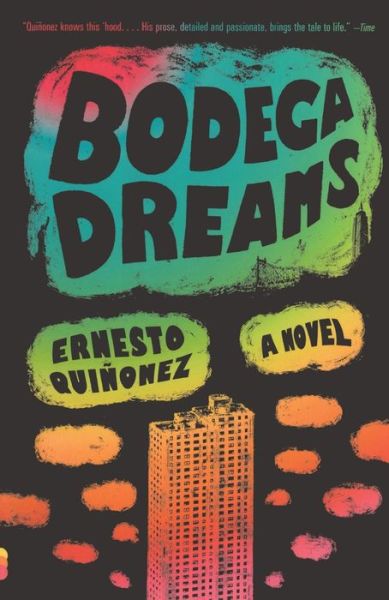
Aim: How do we analyze our first impressions of some major themes, ideas and characters in Bodega Dreams?
Do Now: Take the anticipation survey as you listen to the Spanish Harlem Orchestra. It is not necessary to complete the final reflection at this time.
Standards: CCSS.ELA-Literacy.RL.9-10.2 Determine a theme or central idea of a text and analyze in detail its development over the course of the text, including how it emerges and is shaped and refined by specific details; provide an objective summary of the text.
- Analyze which survey questions do you think connect to which characters based on what you know about them so far?
- How and when does the end justify the means?
- When does loyalty come before love?
- How do you think the characters might help develop ideas or themes in the novel?
- Best Credo for grade and editing sheets.
- Second Credos (for classwork and homework points).
- Independent reading book
· CCSS.ELA-Literacy.RL.9-10.3 Analyze how complex characters (e.g., those with multiple or conflicting motivations) develop over the course of a text, interact with other characters, and advance the plot or develop the theme.
Today we begin a new unit titled Responsibilities, Choices, and Consequences, based on the novel Bodega Dreams. The setting is Spanish Harlem. The survey questions concern some major ideas and themes in the novel. We are just measuring your attitudes and beliefs at this point in time. We will save it for the end of the unit to see how your attitudes and beliefs change after reading the novel. To take the survey here, see Pages.
Today you will also meet some characters and think about how these characters might relate to ideas or themes in the novel. If you missed class, see me about getting your character postcard.
Here are some critical questions to think about today:
Today's AgendaI. Survey!
II. Barometer
III. Postcard Introductions
IV. Final Reflection/Closing
Monday, October 28, 2013
Plot (Conflict) and Theme in Literature
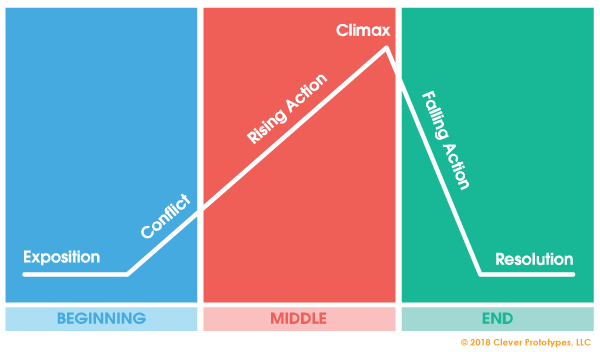 Aim: How do we analyze plot and theme in literature?
 Journal Prompt #5: "Conflict and Theme"
Describe a major conflict in your life. Then, describe a major theme (idea) of your life. Journal responses should be at least one well-organized paragraph.
Today is Literature Circle. There will be a presentation on Types of Conflict and Theme in Literature. After the mini-lesson, apply what you learned to the main character in your independent reading book. In other words, respond to today's journal prompt once again, only this time as it relates to the main character in your book. This response should be at least two-paragraphs and as always, it should be supported with specific and relevant evidence from the text.
Today's Agenda
I. Do Now
II. Mini-lesson: Conflict and Theme
III. Writing Workshop
IV. Closing
What's due
- Final Credos and editing sheets are due. Second credos should be submitted for classwork points.
- Independent reading book
Wednesday, October 23, 2013
Aim: How do we share our Credos?
Journal Prompt #1: "My Credo"
What does your Credo say about you, your point of view, and your thinking? Explain in at least one well-organized paragraph.
Today is Sharing Day. You are invited to read your Credos to the class in a caring, nurturing environment. Everyone who reads their Credo will receive five bonus points. The first person to share receives ten points.
Final Credos must be typed, double-spaced 12 pt. font, and at at least one-page long. Email them to msbecker4@gmail.com.
For inspiration, you can listen to or read a multitude of personal essays at this Web site.
Today's Agenda
I. Do Now
II. Sharing protocols
III. Credo Sharing
IV. Closing
What's due
- Final Credos are due.
- Independent reading book
- "Where I'm From" poem (Overdue)
Tuesday, October 22, 2013
Aim: How do we evaluate our best Credo?
Journal Prompt #1: "My best work"
What makes your best work your best work? Explain.
We hope you have had fun writing about your beliefs. We also hope they are not all serious. Some beliefs are beliefs that remind you to stop and have fun. For example, I believe that pretzels and ice cream are a marriage made in heaven.
Today you should be completely focused on your best Credo--editing, revising, polishing it before you submit it for your performance task. Don't forget that you must submit proof that you were edited (peer editing worksheet) along with your Credo or points will be deducted. An editing sheet showing that you edited someone will count toward classwork points. The credo you do not turn in for a grade will also count toward classwork points.
Final Credos must be typed, double-spaced 12 pt. font, and at at least one-page long. Sharing Day is Wednesday.
For inspiration, you can listen to or read a multitude of personal essays at this Web site.
Today's Agenda
I. Do Now
II. Focusing on the best
III. Writing Workshop
IV. Closing
What's due
Journal Prompt #1: "My best work"
What makes your best work your best work? Explain.
We hope you have had fun writing about your beliefs. We also hope they are not all serious. Some beliefs are beliefs that remind you to stop and have fun. For example, I believe that pretzels and ice cream are a marriage made in heaven.
Today you should be completely focused on your best Credo--editing, revising, polishing it before you submit it for your performance task. Don't forget that you must submit proof that you were edited (peer editing worksheet) along with your Credo or points will be deducted. An editing sheet showing that you edited someone will count toward classwork points. The credo you do not turn in for a grade will also count toward classwork points.
Final Credos must be typed, double-spaced 12 pt. font, and at at least one-page long. Sharing Day is Wednesday.
For inspiration, you can listen to or read a multitude of personal essays at this Web site.
Today's Agenda
I. Do Now
II. Focusing on the best
III. Writing Workshop
IV. Closing
What's due
- Final Credos are due on Wednesday for Sharing Day.
- Journals are being collected for 1st Marking Period grade.
- Independent reading book
- "Where I'm From" poem (Overdue)
Monday, October 21, 2013
Second of Two Credos
Aim: How do we begin our second Credo?
Journal Prompt #10: "Second Credo"
Explain something you learned from writing your first credo. How will this change your approach to your second credo?
Today you should begin your second credo. Think about what you learned from writing your first and use that experience to make this one even better. Remember, personal essays are no different from Regents essays in terms of writing. Credos still must be organized and developed. Opinions always must be supported with evidence and/or examples and analysis.
Planning, revising, and editing is always part of the process so continue to work with a peer editor. Use the peer editing worksheet to guide your editing.
You will submit the best of your two Credos for a project grade. Final Credos must be typed, double-spaced 12 pt. font at at least one-page long. Sharing Day is Wednesday.
For inspiration, you can listen to or read a multitude of personal essays at this Web site.
Today's Agenda
I. Do Now
II. Trying new approaches
III. Writing Workshop
IV. Closing
What's due
- Final Credos are due on Wednesday for Sharing Day.
- Journals are being collected for 1st Marking Period grade.
- Independent reading book
- "Where I'm From" poem (Overdue)
Friday, October 18, 2013
Peer Editing
Aim: How do we plan, revise, and edit our first Credo?
Journal Prompt #8: "Help!"
Explain something you need help with in writing your first Credo. Topic? Direction? Audience? How to start? Please explain your confusion or challenge as completely as possible.
Someone once said that writing is 90% re-writing. It's never too early to begin the editing process. Today we will pair up with editors to help shepherd our first Credos. Use your editor to help you brainstorm, re-write, develop--whatever you need. See pages for a copy of the peer editing worksheet. When you turn in your Credo for a grade, you must also submit evidence that you have been edited. In other words, the peer editing worksheet.
For inspiration, you can listen to or read a multitude of personal essays at this Web site.
Today's Agenda
I. Do Now
II. Peer Editing
III. Writing Workshop
IV. Closing
What's due
- First Credo is due by end of day Friday
- Independent reading book
- "Where I'm From" poem (Overdue)
Thursday, October 17, 2013
Aim: How do we begin writing our first Credo?
Journal Prompt #8: "Yourself"
Do you believe in yourself? Why or why not? Explain in at least one well-organized paragraph.
Today we will begin writing our first Credos. There is a handout with some suggested DRAPE strategies for beginning your Credo. They are just suggestions. You can follow any of them or none of them. The point is to just start writing. You can always go back and polish your intro after you have a better idea on where you are taking your Credo. Things always come into more focus the more you write.
For inspiration, you can listen to or read a multitude of personal essays at this Web site.
Today's Agenda
I. Do Now
II. How to begin a Credo
III. Writing Workshop
IV. Closing
What's due
 |
| A credo written on a new bike path I was riding on Tuesday! |
Journal Prompt #8: "Yourself"
Do you believe in yourself? Why or why not? Explain in at least one well-organized paragraph.
Today we will begin writing our first Credos. There is a handout with some suggested DRAPE strategies for beginning your Credo. They are just suggestions. You can follow any of them or none of them. The point is to just start writing. You can always go back and polish your intro after you have a better idea on where you are taking your Credo. Things always come into more focus the more you write.
For inspiration, you can listen to or read a multitude of personal essays at this Web site.
Today's Agenda
I. Do Now
II. How to begin a Credo
III. Writing Workshop
IV. Closing
What's due
- First Credo is due by end of day Friday
- Independent reading book
- "Where I'm From" poem (Overdue)
- Engrade account and message
Wednesday, October 16, 2013
Listening to the Credos of Others
Aim: How do we analyze Credos for effectiveness?
Journal Prompt #7: "Forgiveness"
Do you believe in forgiveness? Why or why not?
Today we will evaluate a selection of Credos and personal essays. You can listen to or read a multitude of personal essays at this Web site. If you missed class, you will be able to download the worksheet from Engrade.
As you listen to or read the Credos of others, consider these critical questions:
Today's Agenda
I. Do Now
II. How to evaluate a Credo
III. Listening and Reading Workshop
IV. Closing
What's due
Journal Prompt #7: "Forgiveness"
Do you believe in forgiveness? Why or why not?
Today we will evaluate a selection of Credos and personal essays. You can listen to or read a multitude of personal essays at this Web site. If you missed class, you will be able to download the worksheet from Engrade.
As you listen to or read the Credos of others, consider these critical questions:
- What are the values and beliefs the author feels strongly about and why?
- How do you infer the author lives his/her life guided by these values and beliefs?
- How did s/he arrive at this belief?
- Was the belief expressed effectively? Why or why not?
Today's Agenda
I. Do Now
II. How to evaluate a Credo
III. Listening and Reading Workshop
IV. Closing
What's due
- Independent reading book
- "Where I'm From" poem (Overdue)
- Engrade account and message
Tuesday, October 15, 2013
Aim: How do we analyze the Credo assignment?
Journal Prompt #6: "Core Belief or Value"
Write at least one well-organized paragraph explaining a core belief or value that is important to you and why.
Today we will distribute the first Credo assignment, rubric and worksheet. If you missed class, you will be able to download the documents from Engrade.
As you contemplate the topic of your first of two Credos, consider these critical questions:
Today's Agenda
I. Do Now
II. Credos: The Assignment
III. Writing Workshop
IV. Closing
What's due
Journal Prompt #6: "Core Belief or Value"
Write at least one well-organized paragraph explaining a core belief or value that is important to you and why.
Today we will distribute the first Credo assignment, rubric and worksheet. If you missed class, you will be able to download the documents from Engrade.
As you contemplate the topic of your first of two Credos, consider these critical questions:
- What are the values and beliefs I feel strongly about and why?
- How do I live my life guided by these values and beliefs?
- How did I arrive at my beliefs?
- How do I effectively express/explain/persuade readers about my beliefs?
Today's Agenda
I. Do Now
II. Credos: The Assignment
III. Writing Workshop
IV. Closing
What's due
- Independent reading book
- "Where I'm From" poem (Overdue)
- Engrade account and message
Thursday, October 10, 2013
Finding The Words That Guide Our Lives
Aim: How do we identify words/quotes/ideas we live by?
Journal Prompt #4: Select one of the remaining writing prompts on the handout and respond in at least one well-organized paragraph. Don't forget to support your opinion with well-chosen examples or evidence.
We are back online! Did anybody miss us? The last few days in preparation for writing our credos, we've been exploring our beliefs and values with different writing activities. Today, we are having "silent" group conversations. We'll look at a lot of quotations and sayings and then write a short reflection on one that particularly resonates with you. That will start the conversation with the person to the left of you, who will read what you wrote and respond in writing. This conversation can go on and on as long as it is written, not spoken.
Today's Agenda
I. Do Now
II. Mini lesson: How to Converse Silently
III. Silent Conversation
IV. Closing
What's due
Journal Prompt #4: Select one of the remaining writing prompts on the handout and respond in at least one well-organized paragraph. Don't forget to support your opinion with well-chosen examples or evidence.
We are back online! Did anybody miss us? The last few days in preparation for writing our credos, we've been exploring our beliefs and values with different writing activities. Today, we are having "silent" group conversations. We'll look at a lot of quotations and sayings and then write a short reflection on one that particularly resonates with you. That will start the conversation with the person to the left of you, who will read what you wrote and respond in writing. This conversation can go on and on as long as it is written, not spoken.
If you miss this class or if you have an interest in hearing some personal essays for ideas check out the This I Believe Web site.
Today's Agenda
I. Do Now
II. Mini lesson: How to Converse Silently
III. Silent Conversation
IV. Closing
What's due
- Independent reading book
- "Where I'm From" poem (Overdue)
- Engrade account and message
Sunday, October 6, 2013
Personal Essay Writing

Friday's Publishing Party
Aim: How do we identify and analyze personal essays?
Journal Prompt #1: Select one of the writing prompts on the handout and respond in at least one well-organized paragraph. Don't forget to support your opinion with well-chosen examples or evidence.
What is a Credo? It's a personal essay. What is a personal essay? That is what we will think about today. We have three examples to read: a personal essay, a personal narrative, and a personal memoir. The personal essay often combines elements of both the narrative and the memoir. As we analyzed the essential questions of the Credo unit last week, most students seemed to agree that our personal beliefs and values are shaped in some ways by other people, our communities, and our experiences. So it makes sense that a personal essay often has elements of both the narrative and memoir.
In the interest of efficiency, we will break up into "jigsaw" groups with one essay assigned to each group. There is a graphic organizer to complete (by each student) and a short reflection at the end of class.
If you miss this class or if you have an interest in hearing more personal essays check out the This I Believe Web site.
If you miss this class or if you have an interest in hearing more personal essays check out the This I Believe Web site.
Students are required to have journals by today.
Today's Agenda
I. Do Now
II. Mini lesson: The Personal Essay
III. Group readings
IV. Group presentations
IV. Closing
What's due
- Independent reading book
- "Where I'm From" poem
- "Where I'm From" self-evaluation
- Engrade account and message
Always check Engrade for your up to the minute progress in this class.
Final drafts of poems are overdue. This is your first project of the semester so it will count as 33% of your grade so far in this class.
Final drafts of poems are overdue. This is your first project of the semester so it will count as 33% of your grade so far in this class.
Subscribe to:
Posts (Atom)